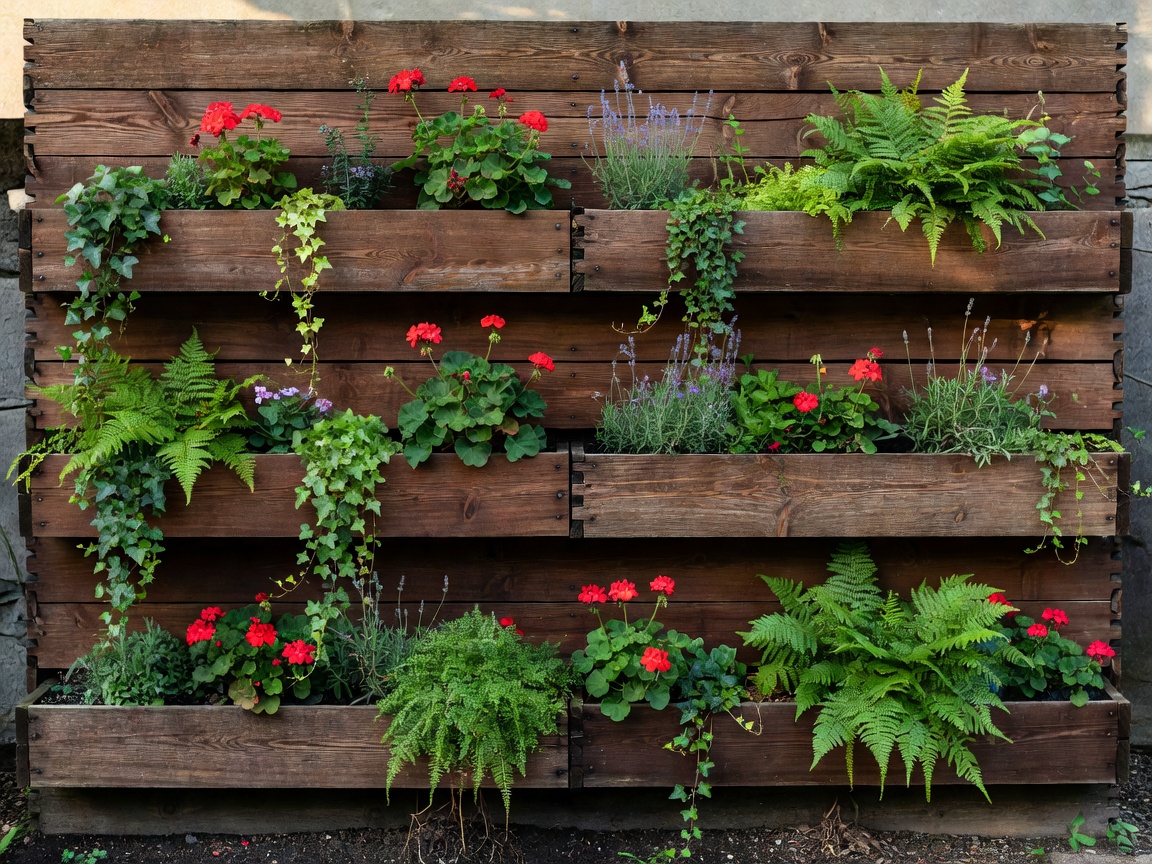
When horizontal floor area is limited to a narrow balcony or windowsill, upwards is the only direction left to expand. Vertical gardening allows city dwellers to multiply their growing area up to four times while utilizing sunlit walls and railings effectively.
1. Structural Weight Limits and Safety Anchorages
Before installing heavy wooden ladder planters or steel modular grids, calculating saturated soil loads is paramount. Damp potting mixes, root systems, and water retention can weigh upwards of 1.35 kilograms per liter of volume.
- Wall Anchorages: Never rely on light adhesive hooks for damp outdoor planters. Use heavy-duty masonry expansion anchors or frame-supported free-standing units.
- Railing Hanging Baskets: Ensure brackets hook inwards onto structural balcony ledges to prevent accidental falling hazards during high-altitude wind gusts.
2. Tiered Solar Microclimates
Vertical planters create distinct micro-climates across tiers. Upper tiers absorb intense direct sunlight and dry out faster, while lower tiers benefit from shade cast by upper boxes.
- Top Tier (Sun Lovers): Mediterranean herbs like thyme, oregano, and dwarf tomatoes that demand intense sunlight and free drainage.
- Middle Tier (Moderate Shade): Leafy greens, butterhead lettuce, and strawberries that thrive in balanced ambient sunlight.
- Lower Tier (Shade Tolerant): Mint, parsley, and ferns that tolerate lower light conditions and moisture trickling down from upper tiers.
Interactive Weight Calculation Utility:
Before installing multi-tier vertical planters on your balcony walls, estimate your wet soil load with our interactive engineering tool:
Open Vertical Space & Weight Load Estimator Tool3. Efficient Vertical Irrigation Systems
Watering stacked planters manually can lead to lower boxes being oversoaked by run-off while top boxes remain thirsty. Consider installing micro-drip emitters or self-watering reservoir boxes with overflow spouts to maintain uniform moisture throughout your vertical setup.